Last year, Licia Young’s toilet-paper-themed earrings gained attention after Britney Spears shared them on Instagram. Her story shows how the right creator connection can open doors that paid exposure may not. It also reminds you that trust grows over time.
In 2026, your tiktok influencer marketing cost may range from about $5 for a nano creator to more than $20,000 for a mega creator. Deliverables, audience quality, usage rights, and campaign goals shape the final price.
With more than 1.5 billion active users and about 68 minutes of daily attention, the platform gives brands strong discovery potential. Global spending reached $32.55 billion in 2025, while 31% of marketers included the app in their 2026 plans. Your agreement still depends on scope, not a fixed rate.
Key Takeaways
- Creator pricing can span from $5 to over $20,000.
- Audience fit matters as much as follower count.
- Strong content supports discovery and trust.
- Brands should define deliverables before agreeing.
- Long-term relationships may outlast one viral post.
tiktok influencer marketing cost: What You Should Expect to Pay
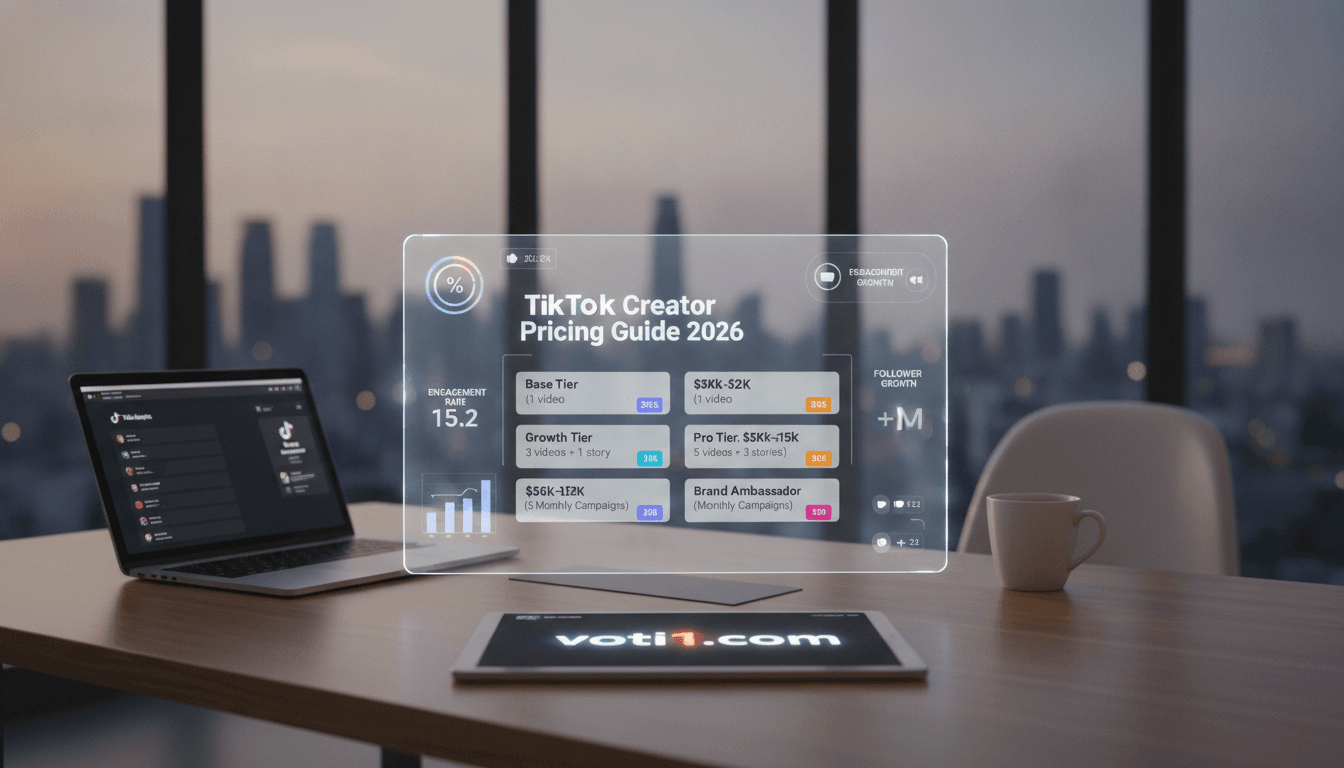
Plan on paying about $5–$200 for nano creators, $200–$1,200 for micro creators, and $1,200–$5,000 for mid-tier creators. Macro partnerships may reach $5,000–$15,000, while mega creators can exceed $20,000.
These are starting ranges, not fixed quotes. Your package may include one video, several posts, revisions, product delivery, links, usage rights, or paid ad access. Each item can change the final rate.
Typical Rates by Influencer Tier
| Creator tier | Follower range | Typical rate |
|---|---|---|
| Nano | 1,000–10,000 | $5–$200 |
| Micro | 10,001–100,000 | $200–$1,200 |
| Mid-tier | 100,001–500,000 | $1,200–$5,000 |
| Macro | 501,000–1 million | $5,000–$15,000 |
| Mega | 1 million or more | $7,000–$20,000+ |
Why Engagement Quality Matters More Than Follower Count
A large audience size does not ensure strong value. A creator with 50,000 followers and 3% engagement could support a $150 base rate at 10 cents per active response. Review comments, shares, saves, watch time, and past sponsored results before agreeing to rates. Treat every rate card as a negotiation starting point.
Why TikTok Influencer Marketing Rates Vary So Widely
A creator’s quote reflects more than follower count. Several factors shape the final rate, including audience fit, content demands, timing, and campaign goals. For brands, relevance often matters more than raw reach.
Audience Size, Niche, and Demographics
TikTok reaches more than 1.5 billion active users, with people spending about 68 minutes on the platform each day. Yet a United States brand needs an audience in its shipping area. A focused beauty, finance, fitness, or technology niche may support higher rates because it offers stronger purchase intent.
Content Quality, Video Format, and Production Complexity
A simple phone video takes less time than a polished product story. Scripts, lighting, editing, voiceovers, actors, locations, and reshoots can raise production work. Higher content quality may also improve engagement, but it requires more planning and review.
Campaign Goals, Timeline, and Expected Results
An awareness campaign may focus on views and reach. A sales campaign may need links, discount codes, tracking, and reports. Fast trend content can command a premium, while tutorials need research and approvals. Strong engagement helps, but results are never guaranteed.
TikTok Influencer Rates by Creator Tier
Your best choice depends on more than follower count. Audience fit, engagement, video quality, and campaign scope all shape the final rate. A smaller creator may deliver stronger value when the audience matches your brand.
Nano and Micro Creator Pricing
Nano creators usually have 1,000–10,000 followers and may charge $50–$200 per video. A full campaign may range from $100–$500. Micro creators with 10,001–100,000 followers often charge $200–$800 per video, or $500–$2,000 for a broader package.
Mid-Tier and Macro Creator Pricing
Mid-tier and macro creators can reach larger audiences across the platform. Their video rates often fall between $800 and $5,000. Niche expertise, audience geography, past results, and production needs can move the rate higher.
Mega Creator and Celebrity Campaign Rates
Mega creators have at least one million followers. Celebrity partnerships may run from $5,000 to $50,000 or more per video. Integrated campaigns can exceed $200,000. Before choosing by size alone, compare reach, engagement, rights, and content demands. Several smaller creators may offer wider testing and better niche coverage.
Realistic TikTok Influencer Marketing Budgets for Brands
A clear spending plan helps you test ideas without placing your whole budget on one creator. In 2026, 31% of marketers include TikTok in their plans, so a measured approach can help your brand compete.
Starter Campaign Budgets
Small campaigns often begin at $5,000–$15,000. This range can support five micro creators, several creative angles, and sample products. You can compare views, clicks, comments, and sales before expanding.
- Reserve funds for creator fees, products, shipping, tracking, and paid media.
- Test different messages before raising the price of each placement.
- Keep a small buffer for revisions or unexpected campaign expenses.
Mid-Size Brand Campaign Budgets
A mid-size campaign commonly runs from $20,000 to $100,000 or more. It may include multiple creators, polished content, reporting, licensing, and paid amplification. Enterprise programs can reach six figures each year through ongoing partnerships.
“Start small, learn quickly, and scale what works.”
If planning feels unfamiliar, help can simplify your next step.
How TikTok Influencers Charge for Brand Partnerships
Payment terms should match the work, reach, and results you expect. Before signing, define each deliverable, deadline, approval step, and reporting need.

Per-Video and Per-Post Rates
A flat fee covers one video or post. List its length, concept, tags, links, revisions, and publishing date. A package of several posts may lower the rate per asset. Usage rights, exclusivity, and permission to run ads raise the total.
Performance terms can add flexibility. Pay-per-click, coupon codes, affiliate commissions, and pay-per-acquisition connect payment to clicks, redemptions, sales, or new subscribers.
Per-Campaign and Long-Term Partnership Pricing
A campaign fee can bundle videos, posts, distribution, reports, and deadlines. Long-term deals often build trust because creators show the product more than once. They may also offer better value than separate bookings.
For example, a $150 base deal could reach $325 after $50 for rights, $100 for exclusivity, and $25 for a rush request. Sponsored posts should clearly use #ad or #sponsored, following FTC guidance.
| Payment model | Best use | Key pricing driver |
|---|---|---|
| Per video | One defined asset | Length and revisions |
| Per campaign | Several deliverables | Scope and deadlines |
| Affiliate | Sales-focused work | Commission and conversions |
Hidden Costs That Can Increase Your TikTok Campaign Price
The first quote rarely shows the full picture. Extra fees can appear when your campaign needs broader usage, faster delivery, or access to a creator’s account. A careful contract helps you protect your budget and avoid surprise costs.
Usage Rights and Paid Advertising Licensing
Usage rights control how your brand may share creator content. Organic reposting may cost less than paid advertising. Ads give brands more reach, control, and commercial value, so licensing often adds to the fee.
Confirm whether rights cover edits, your website, email, another platform, or only the original post. State whether access lasts 30 days, 90 days, one year, or forever. One sample deal added $50 for usage rights.
Exclusivity, Whitelisting, and Content Repurposing
Exclusivity stops an influencer from working with competing brands for a set period. That lost opportunity can raise the rate. A sample agreement added $100 for exclusivity.
- Define whitelisting access, ad duration, targeting, spend, and approvals.
- Price Reels, Shorts, testimonials, emails, and retail screens separately.
- List edits, renewal terms, and ownership rights in every campaign contract.
Clear terms keep hidden costs from becoming expensive surprises.
How to Judge Whether a TikTok Creator Is Worth the Rate
A high quote does not always signal strong value. Look past popularity and review the creator’s audience fit, engagement quality, and business results before you agree to a rate.
Sponsored Content Engagement and Historical Performance
Review paid posts apart from organic videos. A creator may show a strong overall engagement rate yet perform poorly with product content. Compare comments, shares, saves, watch behavior, clicks, and conversions. Well-made sponsored content can match or exceed organic engagement.
Ask for case studies that show reach, engagement rate, and sales results. HypeAuditor and Social Blade can help flag fake followers or unusual activity. This data gives you a clearer view of likely performance.
Audience Demographics and Brand Alignment
Request platform analytics for age, gender, location, interests, income signals, and device use. A focused niche may beat a larger general audience. Mauricio Abascal also recommends checking creators who already engage with your brand. That familiarity can make sponsored storytelling feel more genuine.
| Check | Strong signal | Warning sign |
|---|---|---|
| Engagement rate | Active comments and shares | Views with little response |
| Audience data | Matches your customers | Unclear location or age |
| Past performance | Proven clicks or sales | No measurable results |
How to Calculate a Fair TikTok Influencer Rate
A fair rate begins with math you can explain, not a guess based on popularity. Use recent engagement and view data to build a practical starting point for each influencer.
Engagement-Based Pricing
Start with this formula: audience size × engagement rate × value per engagement. A creator with 50,000 followers, 3% engagement, and a $0.10 value produces a $150 base rate.
- Beauty and fashion: about $0.10–$0.15 per engagement.
- General lifestyle: about $0.05–$0.08 per engagement.
- Add fees for rights, exclusivity, rush delivery, or production.
View-Based and CPM Pricing
For view-based pricing, divide expected views by 1,000, then multiply by the CPM. At 100,000 views and a $15 beauty CPM, the starting rate equals $1,500. Treat this as a negotiation tool. Content quality, audience fit, and algorithm changes affect performance.
Check profit before approval. A $2,000 deal that creates $1,500 in profit produces a -25% ROI.
| Method | Formula | Example rate |
|---|---|---|
| Engagement | 50,000 × 3% × $0.10 | $150 |
| CPM | 100,000 ÷ 1,000 × $15 | $1,500 |
How to Set a TikTok Influencer Marketing Budget for ROI
Start with the result you want, then build your spending plan around it. A clear goal helps you choose useful metrics and avoid paying for reach that does not support business growth.
Choosing Campaign Goals and Key Performance Indicators
Choose one primary goal, such as awareness, traffic, leads, sales, app installs, or repeat purchases. Then track views, unique reach, watch time, engagement, click-through rate, conversions, revenue, customer acquisition rate, and profit. These KPIs show whether your content reaches the right audience and drives action.
- Use a unique landing page, discount code, or affiliate link.
- Compare audience quality with reach and campaign performance.
- Set a budget limit before contacting creators or agencies.
Estimating Clicks, Conversions, Sales, and Profit
One sample used a $2,000 fee, a 2% click-through rate, a 3% conversion rate, a $75 order value, and a 40% margin. Its forecast showed $1,500 in expected profit and a -25% ROI. Use this formula: (expected gain − investment) ÷ investment × 100. A lower fee, stronger conversion rate, higher order value, or better margin can improve results.
Licia Young’s story also supports long-term audience growth over fleeting viral exposure. If these calculations feel unfamiliar, before you spend.
How to Find TikTok Influencers Within Your Budget
Smart discovery starts with a focused search, not a large follower number. Build a shortlist through creator platforms, niche searches, hashtags, competitor pages, and customer suggestions.

Creator Discovery Tools and Influencer Platforms
Use Social Bluebook for a social profile value estimate. Influencer Marketing Hub’s TikTok Money Calculator can also provide a starting rate before you request proposals. HypeAuditor adds useful checks for engagement patterns, audience quality, and suspicious activity.
Review each profile by niche, location, average views, sponsored results, deliverables, and usage rights. This process helps brands compare likely value within a set budget.
Finding Creators Who Already Engage With Your Brand
Mauricio Abascal recommends checking your followers, tagged posts, and comments. You may find influencers who already discuss your products or related competitors. Their content can reflect customer language more naturally than a paid introduction.
“Look for proof of fit before you pay for reach.”
- Record estimated fees and average views.
- Check niche relevance and location.
- Note past sponsored performance.
| Discovery source | What to review | Budget benefit |
|---|---|---|
| Creator platforms | Rates and profile data | Faster comparisons |
| Brand accounts | Followers and tagged posts | Stronger fit |
| Niche searches | Topics and average views | Better targeting |
How to Vet TikTok Influencers and Avoid Costly Mistakes
Before you approve a partnership, inspect the account as carefully as the offer. A polished profile can still hide weak audience quality or unclear results.
Spotting Fake Followers and Bot Engagement
Watch for sudden follower spikes, repeated comments, generic usernames, missing profile images, and engagement clustering. An unusual follower-to-engagement ratio may also signal automated activity.
Use HypeAuditor and Social Blade with your own review. Large accounts may contain some bot followers, but several warning signs deserve questions. Request audience data on location, age, gender, average views, growth, and sponsored performance.
Reviewing Media Kits, Rate Cards, and Case Studies
A reliable creator media kit lists rates, deliverables, add-ons, package discounts, and benchmarks. Strong case studies show clicks, conversions, sales, or revenue—not only impressive impressions.
Ask creators to explain past results and approval terms. Confirm that each creator will follow FTC rules. Sponsored posts need clear labels such as #ad or #sponsored.
- Check account quality and audience fit.
- Verify performance data before signing.
- Put disclosure duties in the agreement.
| Review area | Trust signal | Warning sign |
|---|---|---|
| Audience | Steady growth | Sharp unexplained spikes |
| Engagement | Relevant comments | Repeated generic replies |
| Proof | Verified sales data | Views without outcomes |
How to Negotiate TikTok Influencer Rates Effectively
Good negotiations begin with clarity, respect, and room to adjust. Rates are private agreements, not regulated prices. Start with a brief that covers your goal, audience, concept, deliverables, timeline, approvals, usage rights, and success measures.
Using Flexible Deliverables and Package Deals
Ask whether the creator can lower the flat fee by shortening the video, reducing revisions, or limiting licensing time. You might also change posting frequency or exclusivity. Several videos in one package can reduce the per-asset rate while giving creators steady work and your brand a consistent story.
Do not push creators below a fair market value. Underpayment can weaken preparation, communication, and content quality. Mauricio Abascal notes that your brand does not need to be established before you work with creators.
Balancing Flat Fees, Affiliate Commissions, and Performance Bonuses
Combine a fair base payment with affiliate commissions, tracked coupon codes, click bonuses, redemptions, or sales rewards. This approach shares risk and connects payment with results. Set realistic timelines and consider a long-term creator relationship when the first campaign performs well.
Put payment dates, disclosures, revisions, cancellation terms, ownership, ad permissions, and late-delivery rules in writing. For ideas on strong short-form assets, explore UGC ad-style video creation.
What Makes TikTok Influencer Marketing Difficult for Beginners
Launching your first creator campaign can feel like managing a small production team. You must research talent, send outreach, negotiate terms, ship products, approve scripts, and track results in the right order.
Managing Outreach, Contracts, Content Approvals, and Deadlines
Each campaign may include several moving parts. These include contracts, product delivery, publishing dates, payment, reporting, usage rights, and revisions. Complex videos may need several review rounds, which makes deadlines harder to protect.
FTC rules also require clear disclosure of a sponsored relationship. A missed label can create compliance trouble. A missed approval can delay a product launch, seasonal offer, trend opportunity, or paid advertising schedule.
- Define revisions, cancellations, ownership, exclusivity, and payment dates.
- Use a shared calendar for shipping, reviews, publishing, and reports.
- Keep briefs and approval notes in one organized file.
Vague terms often lead to disputes. Managing several creators multiplies messages and decisions. Spreadsheets, standard briefs, and documented workflows reduce errors. Your limited experience does not block success, but expert guidance can protect campaign quality and your budget.
When to Get Expert Help With TikTok Influencer Marketing
Outside support can make your first creator campaign easier to manage. It helps when you lack experience, time, or a clear process. Even a small test may require $5,000–$15,000, so avoidable errors can reduce your learning budget.
Getting Assistance When You Are Unfamiliar With the Process
Professional guidance can help you compare rates, review audience data, write contracts, and set useful tracking links. It can also support disclosures, paid ads, approvals, and performance reports. Mauricio Abascal notes that brands do not need to be established before starting creator partnerships.
“Brands do not need to be established before starting influencer partnerships.”
Saving Time While Protecting Your Budget and Campaign Quality
Experienced support can manage discovery, outreach, negotiation, shipping, and deadlines. This matters even more for mid-sized campaigns of $20,000–$100,000 or more. Enterprise programs may reach six figures each year, making careful execution essential.
- Use expert help when your team lacks campaign experience.
- Delegate repeated tasks when deadlines compete with daily work.
- Protect quality with clear reviews, tracking, and reporting.
Save time without losing control of your goals.
| Need | Useful support | Result |
|---|---|---|
| Limited experience | Contracts and rate review | Fewer errors |
| Limited time | Outreach and coordination | Faster execution |
| Large budget | Tracking and reporting | Better decisions |
How to Measure and Improve TikTok Influencer Campaign Performance
Reliable tracking turns creator activity into clear business insight. With more than 1.5 billion active users and about 68 minutes of daily use, the platform can produce wide reach. Still, views alone do not prove success.
Track the Full Path From View to Sale
Measure reach, views, watch time, engagement, click-through rate, landing-page visits, conversions, revenue, acquisition cost, and profit for each creator. Use unique links, discount codes, pixels, landing pages, and platform analytics to connect exposure with customer action.
Compare creators by cost per view, engaged user, click, conversion rate, revenue, and profit. One example used a 2% click rate, 3% conversion rate, a $75 order value, and a 40% margin. A $2,000 investment that produced $1,500 in profit delivered a -25% ROI.
Build Stronger Partnerships Over Time
Retain partners whose sponsored content keeps strong engagement and sales results. Confirm usage rights before turning successful content into paid ads. This approach helps brands improve their audience strategy across platforms.
Accurate reporting creates smarter decisions.
Conclusion
In 2026, TikTok influencer marketing cost can start in the single digits for nano creators and exceed $20,000 for mega creators. These rates are directional. Scope, audience fit, content needs, licensing, and campaign goals shape each quote.
Your strongest plan weighs engagement, past performance, expected value, and profit. Small brands can test focused creators with a $5,000–$15,000 budget. Larger programs may need $20,000–$100,000 or more. Licia Young’s experience shows why steady audience building matters more than one viral moment.
Use clear contracts, FTC disclosures, tracking links, and creator analytics to protect your investment. Review results, then improve your next campaign. Expert support can save time and reduce costly mistakes.
FAQ
How much should you budget for a creator campaign?
Your budget depends on audience size, engagement rate, niche, content quality, and campaign goals. Small campaigns may begin with a few hundred dollars, while larger partnerships can require several thousand dollars or more.
Is follower count the best way to judge a creator?
No. Review engagement rate, average views, audience demographics, and past results. A smaller creator with an active audience may deliver more value than a large account with weak engagement.
What should a rate include?
Confirm the number of videos or posts, creative work, revisions, publishing dates, product use, and reporting. Ask whether the quote includes production expenses, platform fees, and content rights.
How do usage rights affect pricing?
A brand usually pays more when it wants to reuse content in ads, on its website, or across other platforms. Set the time period, channels, geographic area, and permitted edits in writing.
Should you offer a flat fee, affiliate commission, or both?
A flat fee pays for the creator’s time and production. An affiliate commission rewards sales. Combining both can support quality content while giving the creator an incentive to improve performance.
How can you spot fake followers or weak engagement?
Compare follower count with average views, comments, likes, and shares. Look for sudden audience spikes, repeated comments, unrelated profiles, and unusual data patterns. Request recent analytics before signing.
Which metrics should you track?
Track reach, views, watch time, engagement rate, click-through rate, conversions, sales, and profit. Use unique links, discount codes, or landing pages to connect results with each creator.
What should you include in the agreement?
Define deliverables, deadlines, approval steps, payment terms, disclosure rules, exclusivity, revision limits, cancellation terms, and rights. Clear terms protect both the brand and the creator.
How can you negotiate a better rate?
Offer flexible deliverables, a package deal, or a longer partnership. You can also adjust usage rights, posting dates, exclusivity, or paid ads instead of asking for a lower fee without changing the work.
When should you hire expert help?
Consider support when you lack time, need several creators, or plan a complex campaign. An experienced partner can manage outreach, contracts, approvals, data, and performance reviews while protecting your budget.