
Can you learn this business model without spending money upfront? Yes. You can learn affiliate marketing at no cost and get started today with a niche, a simple website, useful content, and trusted product recommendations. However, results require steady work, patience, and care for your audience.
Sean Ogle once earned four $126.99 commissions, or about $500, minutes after an Empire Building Kit sale began. That moment showed the potential of an affiliate business, but years of website growth and audience service came first. Chris Guillebeau’s kit even included one email each day for a full year.
This guide explains how a product, tracking link, recommendation, and sale connect. You will also discover tools that support topic research, content creation, traffic tracking, and workflow planning. Hard work, knowledge, dedication, and persistence remain central to long-term progress.
Platform setup, search visibility, disclosures, and program choices can feel confusing at first. Practical help is available when you need a clearer path.
Key Takeaways
- You can start with low-cost tools and a simple plan.
- Useful content helps build audience trust.
- Commissions usually follow consistent effort.
- Free tools can support research and traffic checks.
- Clear disclosures protect reader confidence.
- Guidance can simplify setup and program selection.
Affiliate Marketing for Beginners Free: What You Need to Know
You can start without paying for costly software or courses. Still, low startup costs do not remove the need to research topics, create useful content, and learn how buyers make decisions. Your audience needs clear guidance before it trusts a recommendation.
How Affiliate Marketing Generates Commissions
A merchant pays a commission after your tracked link leads to a sale, lead, or approved action. The right affiliate program matches a relevant product or service with a real audience need. One example comes from Sean Ogle: four $126.99 notifications arrived at 11:05 p.m. after his Empire Building Kit launch began. His result reached about $500, yet years of trust-building came first.
Why Free Does Not Mean Effortless
Free tutorials, search tools, social platforms, and email programs reduce costs. They do not replace time, testing, or writing skill. Passive income may develop later, but it rarely appears in a first week. Compare products carefully, explain benefits honestly, and keep helping readers.
Unfamiliar with the process? Guidance can help you choose a platform, prepare content, and avoid early mistakes.
How Affiliate Marketing Works
Three parties turn a product recommendation into a measurable customer action. The merchant owns the offer, you share helpful content, and the customer decides whether to buy. This simple path makes the process easier to understand.
Merchants, Affiliates, and Customers
A merchant creates the product and sets the commission terms. An affiliate publishes a review, guide, or comparison that helps people make a choice. When a customer completes a purchase or approved action, the program checks the referral and may issue payment.
Affiliate Links, Cookies, and Conversion Tracking
Your unique link contains tracking details. After a click, a cookie commonly saves the referral on the user’s computer. The merchant then connects the sale to you. Some programs also use an email address, IP address, or account record.
- Click: Someone follows your link.
- Conversion: The person buys or completes an action.
- Attribution: The program checks its time window and traffic rules.
Broken links, wrong campaign data, or an expired cookie can block valid commissions. Review payment status and approved traffic sources before promoting offers.
| Stage | What Happens | Key Check |
|---|---|---|
| Click | Tracking records the referral | Link works correctly |
| Conversion | Customer completes an action | Offer terms apply |
| Payment | Merchant approves the commission | Rules and cookie window qualify |
What You Need to Start Affiliate Marketing for Free
You can build a simple referral business without a large upfront budget. Pick one focused topic, create a planning document, and choose a basic website or blog. You can also use YouTube, a podcast, an email list, or a social platform to reach your audience.
Setup may feel difficult when the process is unfamiliar. Start with useful research, clear writing, ethical product suggestions, basic SEO, and simple link checks. These skills help an affiliate marketer understand reader needs and improve each piece of content.
- Free resources: planning sheets, public research tools, social accounts, and basic publishing features.
- Possible later costs: hosting, email software, design tools, or professional guidance.
- Promotion choices: Facebook, Instagram, Twitter, Snapchat, LinkedIn, Pinterest, and YouTube.
Your main investment remains time. Set a realistic schedule for content, program applications, promotion, and performance reviews. Consistent action matters more than expensive software. Begin small, track results, and improve your business as your reach grows.
Choose a Profitable Niche and Define Your Audience
Your best niche often begins with a problem you already understand. Choose a focused niche that matches your skills, interests, and curiosity. A broad food topic may attract many searches, but a specific cuisine gives your content a clearer purpose.
Next, test the niche before you commit. Review search results, competitor pages, product reviews, forums, and customer questions. Look for steady demand, manageable competition, and products that solve real problems. A large commission cannot rescue an unrelated offer.
Find a Niche That Matches Your Skills and Interests
Your knowledge helps you explain details with confidence. Your interest also makes regular content easier to create. A website about remote work might serve readers who need laptops, software, or online services.
Evaluate Demand, Competition, and Product Opportunities
Sean Ogle promoted WP Engine to a website-focused audience because hosting matched its needs. He viewed dumbbells as irrelevant since about 99% of Location Rebel readers would not care. This example shows why relevance matters in affiliate marketing.
- Describe your audience’s goals, budget, experience, and concerns.
- List questions your content can answer.
- Check whether trusted affiliates offer useful products.
A clear niche helps your marketing feel helpful, not forced. Refine your niche until the audience, problem, and product fit make sense.
Select the Best Platform for Your Affiliate Business
Your publishing channel shapes how people discover, trust, and use your recommendations. Choose one primary platform that matches your skills, audience habits, content style, and available time. You can expand later when your process feels steady.
Build a Website or Blog
A website or blog gives you strong control over evergreen content, search visibility, comparison pages, disclosures, and link placement. A no-cost blog can help you learn affiliate marketing without a large budget. A custom website offers more control as your business grows.
Use Social Media, Email, or a YouTube Channel
Social media spreads short tips and product ideas quickly. Yet changing rules, limited space, and shifting algorithms can restrict detailed explanations. A YouTube channel can show products in action, while email builds a direct connection with subscribers who request updates.
- Use a blog to answer search questions in depth.
- Choose social media to start conversations and share content.
- Use email to nurture trust with helpful messages.
- Combine channels when you can measure traffic and manage the workload.
Sean Ogle used blog posts, webinars, dedicated emails, and niche websites. His approach shows how one platform can support another. Need help saving time? Get guidance on choosing and setting up your affiliate marketing platform.
Understand the Main Types of Affiliate Products
Your audience may need a physical item, digital education, or an ongoing service. Matching that need with the right offer can improve trust, conversions, and long-term results. Compare quality, price, support, refunds, and commission rules before you recommend anything.
Physical Products and Amazon Affiliate Marketing
Golf balls, appliances, and outdoor gear offer broad demand. Amazon affiliate rates in the supplied data ranged from 1% to 4.5%, with a 24-hour cookie. Volume and buyer trust matter. REI provided a useful contrast, with a 5% rate and a 15-day cookie.
Information Products, Courses, and Communities
Courses, guides, and paid communities often deliver 30% to 50% commissions. Digital delivery lowers retail costs, but quality still matters. Check lesson depth, instructor credibility, refunds, and member support.
Software, Subscriptions, and Professional Services
Tools such as SEMrush, Bluehost, and Interact may offer fixed or recurring income. Content at Scale was cited at 15% recurring commission on a $500 base price. Review retention, billing terms, and audience fit before choosing a brand.
- Physical goods: broad interest, modest rates.
- Information offers: higher rates, quality checks.
- Services: recurring potential and longer customer value.
Find Legitimate Affiliate Programs and Networks
A careful review can protect your time, income, and audience trust. Start by checking the company, product quality, support history, and public program terms. A reliable offer explains tracking, payment dates, refund rules, allowed traffic, disclosures, and location limits.
Compare Rates, Cookies, and Payment Terms
Do not judge an offer by its commission alone. Amazon lists a 24-hour cookie and rates from 1% to 4.5%. REI lists a 5% commission with a 15-day cookie. Also check the minimum payout, payment method, approval steps, and refund period.
- Test links and review conversion reports.
- Confirm product relevance and geographic limits.
- Read rules on paid ads, email, and coupon use.
Explore Networks and Direct Brand Partnerships
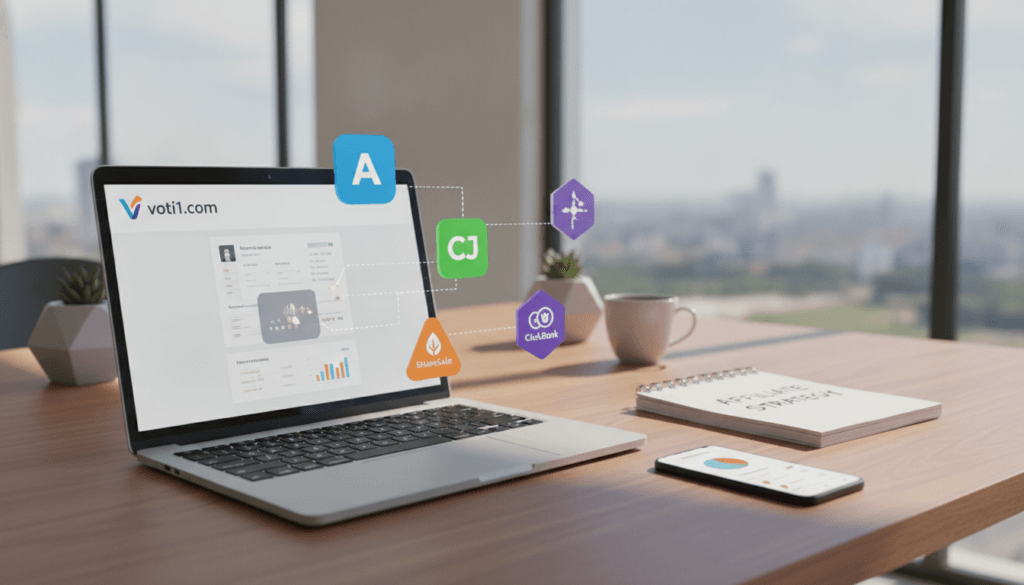
FlexOffers, Commission Junction, ShareASale, Rakuten, and Impact connect you with many brands through one account. Direct partnerships may offer better rates, custom codes, samples, or personal support. Golf companies, for example, may pay 5% to 20%, with many offers near 10% to 15%.
When applications or tracking become confusing, practical assistance can save time. Begin with a few relevant recommendations, measure results, and expand only after the program proves dependable.
Create Helpful Content That Builds Trust
Useful guidance should come before any sales request. Your readers want clear answers, honest details, and practical next steps. This approach helps an affiliate marketer earn trust without relying on loud ads.
Publish Product Reviews and Comparisons
A strong review explains who suits the product, which problem it solves, and where it falls short. Add pricing, alternatives, support details, and evidence from real use. Comparison posts should apply the same criteria to each brand, such as cost, features, quality, and intended use.
Use Tutorials, Resource Pages, Videos, and Emails
Tutorials and resource pages teach a useful method before showing affiliate links. Videos can demonstrate products in action, while email messages can guide readers through a careful choice. Sean Ogle used reviews and videos on Breaking Eighty. He also earned more than $20,000 in 12 months through a blog post, webinars, and dedicated emails.
Negotiated coupon codes may give readers savings while supporting commission income. Add a clear disclosure policy near recommendations. Need help creating content or placing links? Expert support can save time.
Promote Affiliate Links Without Losing Your Audience
Promotion works best when each message helps people solve a real problem. Share useful ideas first, then guide readers toward a relevant offer. This method supports trust, traffic, and steady sales without making your channel feel like an ad stream.
Use Search Engine Optimization to Attract Traffic
Build pages around search intent on Google and Bing. Review, comparison, tutorial, and “best” queries can bring qualified visitors. Use clear headings, useful examples, natural links, and updated facts. Strong content can keep working after publication.
Combine Social Media, Email, and Content Promotion
Share short excerpts, demonstrations, and answers across social media. Avoid posting the same link repeatedly. A YouTube channel can show a product in use, while email can send subscribers to reviews, tutorials, or presale pages. Always honor consent and unsubscribe requests.
Paid ads on Facebook, Instagram, Google, Pinterest, or YouTube need careful testing. They can spend money before you understand conversion data. Start with organic reach, track results, and expand your promotion mix over time.
- Match each link with a clear reader need.
- Measure visits, clicks, and sales.
- Reuse strong content across suitable media.
| Channel | Best Use | Key Caution |
|---|---|---|
| SEO | Evergreen search traffic | Needs patience and updates |
| Social media | Conversation and reach | Avoid repeated links |
| Direct subscriber contact | Respect consent rules |
Follow FTC Disclosure and Affiliate Program Rules
Clear disclosures help readers judge your recommendation with confidence. Place a short notice near product mentions, not hidden on a distant page. Explain that you may earn a commission from qualifying purchases. Honest wording supports trust and meets consumer protection expectations.

Each affiliate program sets its own terms. Rules may limit paid ads, trademark bidding, email messages, coupon use, product claims, link placement, or traffic sources. Review merchant terms, privacy duties, email laws, platform policies, and disclosure language before you publish.
The FTC shutdown of MOBE shows the risk of deceptive income claims and recruitment-led schemes. Avoid promises of overnight success. Describe results with care, support claims with evidence, and never hide important limits.
- Keep disclosures visible and easy to understand.
- Use approved links and traffic methods.
- Save records of program terms and updates.
- Ask for help when compliance rules seem unclear.
A careful process protects your audience and your reputation.
| Compliance Area | What to Check | Safer Practice |
|---|---|---|
| Disclosure | Commission relationship | Place clear notice near recommendations |
| Program terms | Ads, coupons, and traffic | Use approved promotion methods |
| Claims | Income and product statements | Share accurate, supported details |
Common Affiliate Marketing Mistakes to Avoid
Small choices can protect your reputation and income. A careful process helps you avoid weak offers, false promises, and wasted effort.
Promoting Irrelevant or Low-Quality Products
Every recommendation should solve a clear audience problem. Promoting dumbbells to a website-focused readership, as Sean Ogle noted, can weaken trust. Poor service, high refunds, or unsupported claims can harm your business more than a missed sale.
Expecting Passive Income or Instant Results
Real affiliate success takes patience. Sean Ogle explained that results grow after years of steady work, not overnight. Be cautious with “me too” programs that promise thousands of dollars at once. The Federal Trade Commission shut down MOBE as a fraudulent program, which shows why scam awareness matters.
Ignoring Platform Policies and Tracking Data
Read program terms before you publish content, links, or ads. A policy violation can remove posts, suspend accounts, or block commissions. Track impressions, clicks, conversion rate, earnings per click, refunds, and feedback. Use that data to improve your method.
- Check product quality and customer support.
- Test every link and platform rule.
- Choose honest guidance over guru promises.
| Mistake | Risk | Better Action |
|---|---|---|
| Irrelevant offer | Lost trust | Match products to reader needs |
| Instant-income claim | Scam exposure | Check evidence and terms |
| Ignored data | Wasted time | Review clicks, sales, and refunds |
How Much Money Can You Make With Affiliate Marketing?
Your income can range from zero to a substantial annual sum. Results depend on traffic, audience trust, conversion rate, order value, refunds, commission terms, and the time needed to create useful content. Passive income may develop later, but it is never guaranteed.
Pay-Per-Sale, Pay-Per-Lead, and Pay-Per-Action Commissions
Pay-per-sale pays after a customer buys. Pay-per-lead rewards a qualified sign-up. Pay-per-action may cover a trial, registration, or application. Thus, each program measures success in a different way.
“A strong audience and a strong offer must work together.”
High-Paying and High-Volume Affiliate Programs
PayScale cited average annual income of $56,141 in 2025. The bottom 10% earned about $41,000, while the top 10% reached roughly $77,000. These figures describe reported earners, not a promise to new marketers.
Amazon commissions ranged from 1% to 4.5%. Information products often paid 30% to 50%. Sean Ogle reported $20,000 from one post, two webinars, and several emails. One golf brand earned $1,377.15 from 140 Amazon sales and $1,687.83 from 53 direct sales.
- Use high-volume offers to gain reach.
- Compare payout, refund risk, and customer value.
- Seek guidance to improve setup, without expecting guaranteed money.
| Model | Payment Trigger | Typical Economics |
|---|---|---|
| Pay-per-sale | Completed purchase | Linked to order value |
| Pay-per-lead | Qualified sign-up | Often fixed income |
| Pay-per-action | Trial or registration | Depends on approved action |
Get Affiliate Marketing Help When the Process Feels Difficult
You do not need to solve every technical step alone. If referral work feels unfamiliar, a clear plan can help you get started with confidence. An affiliate marketer may need support with niche checks, platform settings, program applications, disclosures, link placement, and conversion tracking.
Know When Guidance Can Help
New publishers often need practical information about tools, rules, and content planning. Experienced readers may understand the model yet lack time to research products, build pages, test links, or maintain compliance.
WGU offers online bachelor’s and master’s degree options that build consumer behavior, strategy, project management, and digital promotion skills. These subjects show why knowledge, patience, persistence, and content creation matter. Meaningful results often follow years of steady activity, not launch-day effort.
Save Time With Proper Setup
Professional services can reduce setup errors and create a repeatable business process. Seek help when technical uncertainty, limited time, or inconsistent execution blocks useful publishing. Reliable information and careful measurement support better decisions.
- Choose a service when your schedule feels tight.
- Check tracking, disclosures, and link placement.
- Expect guidance, not guaranteed money.
Smart support can protect your effort while you build lasting skills.
Build Your Affiliate Marketing Plan and Start Today
A focused plan turns scattered ideas into clear action. Start with one niche, describe your audience, and list three questions people need answered. Then note products or services that solve those problems.
- Choose a website, blog, social profile, email list, or YouTube channel that fits your skills and schedule.
- Research products, join Amazon, and compare other programs, terms, payouts, and tracking tools.
- Publish one useful review, comparison, tutorial, or resource page before adding many links.
- Add a clear disclosure, test each link, and record clicks, conversions, and refunds.
- Improve page titles, headings, and internal links. Check Google rankings and social traffic each month.
This eight-step workflow gives marketers a simple path from website creation to performance checks. Sean Ogle used blog posts, webinars, videos, reviews, and email messages to serve readers before promoting products.
Short on time? An experienced marketer can help organize your business, while an affiliate marketer can focus on useful content and steady growth. Get started with one clear task today.
Conclusion
You can start affiliate marketing free today by choosing a focused niche, creating useful content, joining relevant programs, and measuring each meaningful visitor action.
Program terms matter too. Amazon’s 24-hour cookie and information-product commissions of 30%–50% show why payout rules deserve careful review.
Sustainable income grows when you serve your audience, recommend quality products, follow FTC and merchant rules, and improve content over time. Social media can widen reach, yet trust remains the foundation.
Sean Ogle’s $500 launch-day result and $20,000 twelve-month example show potential, not instant results. Passive income and money require patience, testing, and steady effort.
If unfamiliar tasks slow you down, assistance can clarify setup or save time. Start with one useful step, stay honest, and keep learning.
FAQ
Can you start affiliate marketing as a beginner with no budget?
Yes. You can begin with a blog, social media account, or YouTube channel at no cost. Focus on useful content, a clear niche, and products that match your audience.
How do affiliate links generate commissions?
A special link tracks your referrals. When someone clicks it and completes a sale, lead form, or approved action, the program may pay you a commission.
What skills do you need to become an affiliate marketer?
You need basic research, writing, communication, and content skills. You can also learn SEO, email outreach, audience research, and traffic analysis over time.
Which platform should you choose first?
Choose a platform that fits your strengths. A website supports search traffic, while social media and video can help you reach an audience quickly. A blog is useful when you enjoy writing.
How do you choose products and services to promote?
Select products you understand and can explain honestly. Check quality, customer support, brand reputation, commission terms, and how well each product serves your niche.
Is Amazon Affiliate Marketing a good starting point?
Amazon Associates offers many physical products and a familiar buying process. However, commission rates and program rules can change, so review current terms before you publish links.
How can you build trust with product content?
Create clear reviews, comparisons, tutorials, resource pages, and videos. Share benefits and limits instead of making exaggerated claims. Honest content can support long-term sales.
Do you need an FTC disclosure?
Yes. Tell readers when you may earn money from a link. Place the disclosure near the recommendation, and follow FTC guidance plus each program’s policies.
Can this business create passive income?
It can produce recurring income after strong content gains search traffic. Still, you must update links, review results, answer questions, and maintain your platform.
How much money can you make?
Earnings vary by niche, traffic, product price, commission rate, and conversion rate. Pay-per-sale, pay-per-lead, and pay-per-action programs may offer different income levels.
What mistakes should you avoid?
Avoid promoting poor products, copying other creators, hiding disclosures, relying only on ads, and expecting instant results. Track clicks, conversions, and sales so you can improve your plan.
Where can you get help with setup?
You can use official program guides, creator communities, SEO resources, and trusted courses. Professional support may save time when you need help with a website, email system, or tracking tools.