
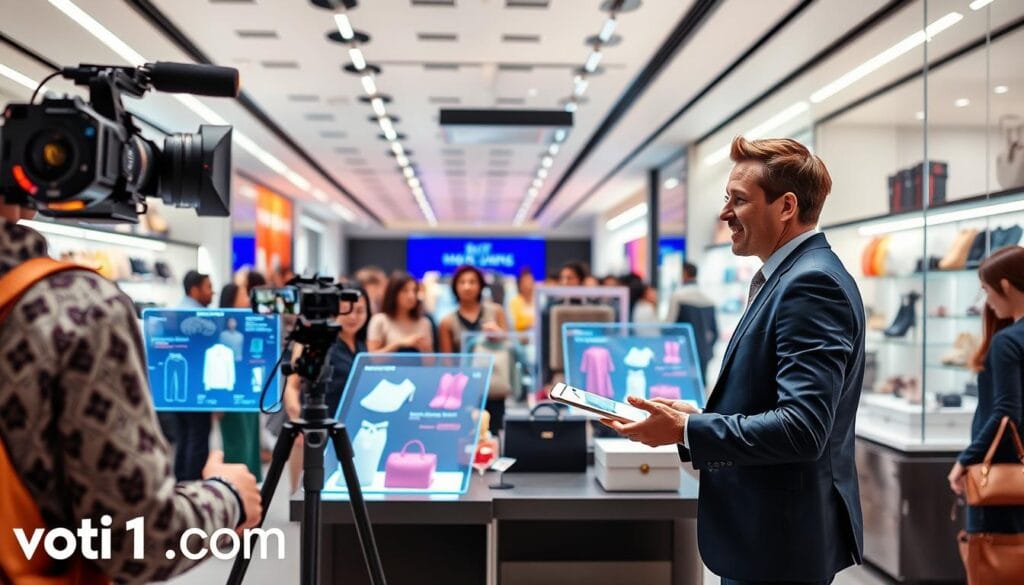
Could a product demo become your next major sales channel? Yes. Live shopping combines real-time video, audience interaction, and in-stream checkout. A host presents a product, answers questions, and helps viewers buy without leaving the video experience.
By 2026, this format is becoming a measurable U.S. revenue channel, not a short-term marketing test. Coresight Research projects the U.S. live commerce market will reach about $68 billion. Around 86 million Americans have already purchased through an event, showing how entertainment, community, discovery, and fast checkout can work together.
Your first event may feel complex. Product catalogs, streaming tools, checkout links, moderation, and analytics all require careful planning. Expert help can save time and reduce technical errors, especially when your brand manages a busy marketing calendar.
Ready to build your site?
Key Takeaways
- Hosts demonstrate products and answer questions in real time.
- U.S. commerce is moving toward interactive video sales.
- The market may reach about $68 billion by 2026.
- Millions of Americans have already bought through events.
- Planning support can simplify your first strategy.
Live Shopping 2026: The Trends Defining U.S. E-Commerce
U.S. retailers are moving from trial broadcasts to revenue programs with clear targets. They track product sales, cart activity, conversion, and repeat purchases. This shift gives live commerce a place in the core commerce plan.
Live commerce becomes a measurable revenue channel
Sprii reports performance up to 10 times higher than standard e-commerce in some cases. Its thousands of hosted events have produced hundreds of millions in revenue. Some brands that run weekly shows report conversion rates up to 20 times higher.
Shoppertainment blends entertainment with instant purchasing
Host-led stories, polls, questions, product overlays, and limited offers turn video into entertainment with a clear path to purchase. Replays and comment-to-buy tools extend engagement after the event.
Brands prioritize owned audiences and first-party customer data
TikTok Shop can expand reach, but its platform keeps much customer data inside its ecosystem. Your own site offers greater ownership, stronger analytics, and direct audience relationships. Reliable tools help you build that foundation without wasting time.
Need expert implementation?
Why Live Shopping Is Growing Across the United States
The U.S. market is moving from passive browsing to social, real-time retail. TikTok Shop launched here in September 2023 and onboarded tens of thousands of small and midsize merchants in less than two years. Its creator-led model helps shoppers discover products through trusted voices, not static pages alone.
More than 150 million people use TikTok in the United States, giving brands broad reach through mobile-first broadcasts. About 86 million Americans have already purchased during an event. That figure shows that consumer adoption extends beyond early adopters. The country now ranks as the second-largest live commerce market behind China.
Interactive video also supports stronger conversion rates. Standard e-commerce often averages 2% to 3%, while real-time events commonly reach 8% to 15%. Results vary by category, host, offer, and execution, but the difference attracts attention. Younger viewers respond to creator advice, community input, product demos, and instant checkout.
“The strongest strategy combines social reach with an owned customer relationship.”
That approach protects your audience from platform changes and supports lasting commerce growth. If connecting your catalog, checkout, and broadcast feels difficult, get practical help.
How Live Shopping Works From Broadcast to Checkout
A successful event follows a clear path from planning to payment. Start with a goal, select products, check inventory, set offer rules, and create a promotion schedule. You need only a smartphone, steady internet, a broadcast platform, and simple tools to begin.
Hosts demonstrate products and answer questions in real time
Your host may be an employee, creator, or product specialist. Using a phone or camera, the host shows product features, answers questions, and responds to viewer behavior. Live chat, polls, and countdowns create real-time engagement while revealing customer concerns.
Viewers engage, add products to their cart, and purchase during the stream
Product cards display prices, pinned items, and inventory alerts. In-video checkout lets viewers buy without leaving the experience to search elsewhere. A typical session lasts about 13 minutes, far longer than the few seconds spent on many product pages.
After the broadcast, a shoppable replay can continue generating sales. Connecting catalog data, checkout, chat, and video tools may challenge beginners, but expert support can simplify the process.
The U.S. Live Commerce Market and Consumer Adoption
The scale of this market now gives U.S. brands a clear budgeting signal. Coresight Research projects approximately $68 billion in U.S. sales by 2026, or about 5% of online retail. That share is meaningful, yet it shows this channel will complement—not replace—the wider commerce mix.
From 2026 to 2033, analysts project a 37.2% compound annual growth rate. Creator marketing, mobile video, and interactive buying habits support that forecast. You can use it to set test budgets, revenue goals, and realistic sales targets instead of treating each event as a one-time experiment.
Reported results show why execution matters
Sephora reports about $50,000 in average revenue per session. Its conversion rates reached four to five times those of classic marketing campaigns. In another case, a fashion retailer using Bambuser achieved a 55% click-to-cart rate, up from 21% in its earlier format.
Results vary by product, host, offer, and platform. Still, the opportunity spans company sizes. Top Whatnot sellers can exceed $100,000 in yearly sales, while smaller brands can build trust with focused audiences. Your first step is choosing a measurable goal.
Key Live Shopping Formats and Platforms to Watch
Your best platform depends on control, discovery, fees, and customer data. Each format can support strong results, but the right choice should match your goals, catalog, and audience.
On-site commerce for stronger brand ownership
An owned site gives your brand control over design, checkout, customer data, replay content, and analytics. Sprii supports shoppable multistreaming across websites, Facebook, Instagram, and partner pages. Bambuser serves global brands such as L’Oréal, LVMH, and H&M. Channelize.io, CommentSold, LiveMeUp, Smartzer, and LISA offer different tools for video, checkout, support, and engagement.
Social commerce through major networks
TikTok Shop has served the United States since September 2023 and reaches more than 150 million U.S. users through creator entertainment and product tags. It may charge up to 6% per item, plus transaction and fulfillment fees. Instagram, Facebook, and YouTube help you reach existing communities and guide shoppers to your storefront.
Marketplaces built for community discovery
Whatnot, North America’s largest marketplace of this kind, streams hundreds of thousands of seller hours each week. It suits collectibles, vintage fashion, sneakers, auctions, and beauty. Amazon Live is exclusive to Amazon sellers, so it offers reach but less customer ownership.
Need help comparing platforms, channels, and costs?
Video Commerce Trends That Extend Value Beyond the Live Event
Your broadcast should keep working after the camera stops. Treat each live shopping session as a content asset that can become a replay, product-page video, email clip, social highlight, or QR-code experience.
Replay sales and redistribution may capture 60% to 80% of a session’s value. Ending distribution with the event leaves useful revenue on the table. Short clips also help viewers who missed the broadcast and answer product questions during later shopping visits.
Permanent placement can improve results. Shoppable video has increased time on product pages by 88% and add-to-cart activity by 64%. Dr. Dennis Gross generated more than $1 million, an 8.2% conversion rate, and 328× ROI from one campaign. Tortuga Backpacks raised product-page conversion by 14% and revenue per visitor by 16%.
PlayShorts reports conversion gains of up to 40% after brands embed short-form video. Use clips across key pages to extend engagement and support the full commerce journey.
Want to turn your content into an ongoing video commerce experience?
| Content format | Best placement | Primary value |
|---|---|---|
| Replay | Storefront and email | Continued product discovery |
| Short clip | Social pages and product pages | More engagement |
| QR video | Packaging and displays | Helpful post-purchase guidance |
What Makes Live Shopping Convert Better Than Standard Product Pages
Human guidance can turn browsing into a confident purchase. The strongest results come from urgency, social proof, and useful demonstrations. However, each part depends on a smooth checkout experience.
Urgency, limited-time offers, and real-time social proof
Countdowns, scarce inventory, and event-only bundles give viewers a clear reason to act. Comments, reactions, purchases, and questions add proof from other shoppers. This engagement feels more credible than a static claim on ordinary pages.
Standard e-commerce conversion rates average about 2% to 3%. Industry research places event conversion rates between 9% and 30%, or three to five times higher. Results still depend on audience quality, offer strength, host skill, and reliable commerce tools.
Product demonstrations that reduce uncertainty and returns
A host can show fit, texture, sizing, ingredients, and real-world use. Viewers can ask questions and see answers in real time. This guidance improves the customer experience and can raise conversion by reducing doubt.
Live-attributed order value often runs 20% to 40% above a site average. Cross-selling during the video can increase cart size. Fashion returns may also fall to about 10%, compared with 30% to 35% for standard online fashion purchases.
Need dependable overlays, checkout, moderation, or offer logic?
| Measure | Standard e-commerce | Event-based benchmark |
|---|---|---|
| Conversion rate | 2%–3% | 9%–30% |
| Order value | Site average | 20%–40% higher |
| Fashion returns | 30%–35% | About 10% |
Industries Benefiting From Live Shopping in 2026
Some categories sell better when customers can see, compare, and ask questions before checkout. U.S. brands gain the most when a product has texture, fit, technical detail, or visible results.
Fashion, beauty, and wellness product demonstrations
Fashion led about 20.6% of global live commerce in 2025. A host can compare sizes, show fabric details, style outfits, and answer fit questions. This visual proof reduces doubt and supports a better shopping experience.
Beauty brands can show skincare steps, makeup techniques, shade choices, and ingredient use. Sephora reports about $50,000 in average revenue per session, with conversion rates four to five times higher than classic campaigns.
“Clear guidance helps customers feel ready to choose.”
Wellness products need careful education. Explain routines, usage, safety points, and realistic results. Electronics, home goods, food, and beverages also suit demonstrations. Let product complexity guide your host, format, duration, and production level.
Want professional setup without doing everything alone?
| Category | Useful demonstration | Customer benefit |
|---|---|---|
| Fashion | Fit and styling | Greater purchase confidence |
| Beauty | Application and shade tests | Clearer product selection |
| Wellness | Routine and safety guidance | More realistic expectations |
Technology and Platform Features Your Brand Needs
Strong technology turns live shopping from a broadcast into a reliable sales experience. Choose a platform with shoppable video, product cards, direct checkout, inventory sync, and fast mobile pages. These features help your customer move from interest to purchase with less friction.
Check whether one dashboard can manage comments, orders, and multistreaming across your site, Facebook, Instagram, YouTube, and partner channels. First-party analytics should show drop-off, clicks, add-to-cart activity, conversion, order value, replay sales, and returns. Stable streaming, clear audio, moderation, reminders, catalog links, white-label design, and support also protect performance.
Platform selection can challenge inexperienced teams. Compare Bambuser, Sprii, LiveMeUp, Channelize.io, LISA, Smartzer, VideoWise, CommentSold, TalkShopLive, and Firework by fit, reach, and ownership. Channelize.io starts at $81 monthly after a 14-day trial. Bambuser starts at $199 for Shopify Essential and $599 for One-to-Many Starter. LiveMeUp costs $89–$399, while CommentSold starts at $149 plus 5% of sales.
Production and staffing add to those fees. For guidance, explore TikTok Shop setup, or choose hands-on help.
How to Measure Live Shopping Performance and Revenue
Good reporting separates attention from income. Begin with a clear goal for each event, such as completed orders, revenue per viewer, or stronger product discovery. View counts matter, but they cannot show whether the experience creates value.
Track conversion rate, click-to-cart activity, average order value, assisted sales, and refunds. Standard e-commerce conversion rates average 2% to 3%, while live commerce often reaches 8% to 15%. One Bambuser fashion retailer improved click-to-cart results from 21% to 55% after refining presentation and platform design.
Conversion rates, click-to-cart activity, and average order value
Compare each event with your own pages and past sessions. Live-attributed order value often runs 20% to 40% above the site average. Treat industry rates as useful context, not a promise.
Viewer engagement, retention, replay sales, and return rates
Measure watch time, retention, chat, questions, poll activity, repeat attendance, and drop-off points. Sessions average about 13 minutes. Track replay and redistributed video separately, since they may produce 60% to 80% of total value after the event.
Review satisfaction, returns, repeat purchases, and product-level results. These measures show whether your marketing attracts qualified customers. Need accurate tracking and optimization support?
Building a Live Shopping Site Without Technical Skills
You do not need a television studio to create a polished buying experience. A smartphone, stable internet connection, basic lighting, lavalier microphone, catalog, and entry-level software can support your first event. Small DTC brands often spend $80 to $200 per month on these tools.
Choosing an e-commerce integration and shoppable video platform
Start with an e-commerce integration that connects products, inventory, checkout, and product pages. Then embed the player, test mobile pages, and schedule the event. LiveMeUp plans cost $89 to $399 monthly. Channelize.io starts at $81 after a 14-day trial.
- Connect your catalog and inventory.
- Configure checkout and test links.
- Embed the video player across key channels.
- Review mobile behavior before promotion.
Preparation takes one to three hours for a small team. Weekly broadcasts can still consume valuable time. Mid-market operations may spend $1,500 to $3,500 per session, while enterprise programs can reach $5,000 to $15,000.
- Check links, stock levels, audio, and moderation.
- Set clear offers and promote them early.
- Share the replay after the broadcast.
No-code platforms reduce barriers, while expert help can prevent costly errors and speed your launch.
Live Shopping Challenges and When to Get Expert Assistance
Building a reliable sales experience takes more than a camera and a product catalog. You must coordinate the host, inventory, offers, moderators, customer service, analytics, and post-event content at the same time.
A weak connection, broken checkout, wrong price, or missing product overlay can damage trust fast. Delayed moderation may also reduce engagement during an event that cannot be repeated. Social commerce offers reach, but TikTok Shop keeps much of the customer relationship inside its own ecosystem.
Enterprise programs need careful planning. A dedicated studio may require three to five production staff, one to four weeks of preparation, and $3,000 to $8,000 or more in monthly software costs. Each session may cost about $5,000 to $15,000. Agency-led, studio-grade platforms such as Bambuser suit brands that need scale.
Expert help makes sense for a first launch, multichannel setup, catalog integration, custom design, analytics, or weekly programming. Even experienced teams may lack time or internal staff. Professional support helps protect conversion and ensures proper implementation.
| Challenge | Business risk | Expert solution |
|---|---|---|
| Technical setup | Checkout or stream failure | Testing and integration |
| Enterprise production | Higher staffing costs | Studio and agency support |
| Data ownership | Limited customer insight | Owned site and analytics |
Conclusion
Live shopping 2026 is now a credible U.S. revenue channel. A projected $68 billion market and millions of participating consumers show its growing role in commerce. For brands, this creates a practical path to new sales and stronger customer trust.
The best strategy combines live events, shoppable video, product-page content, social reach, owned data, and replay distribution. Look beyond views. Conversion rate, click-to-cart activity, average order value, retention, replay sales, and return rates reveal the true revenue impact.
Beginners may need help with platform choice, catalog setup, checkout, moderation, production, and analytics. Even skilled teams may lack time. Start with focused events, suitable products, a prepared host, reliable tools, and a clear plan for ongoing content. Set realistic sales goals and improve after each session.
Ready to create a smoother customer experience?
FAQ
What is live shopping in 2026?
It combines real-time video, product discovery, and checkout in one digital experience. A host presents items, answers questions, and guides viewers toward a purchase. In 2026, more brands are treating this format as a measurable sales channel.
Why is live commerce growing in the United States?
Consumers want useful demonstrations, quick answers, and a more personal buying experience. Video also helps brands build trust and reach audiences across social commerce platforms, websites, and mobile channels.
How does a live shopping event work?
You promote the event, bring in a host, and feature products through an interactive video session. Viewers can ask questions, select products, add items to a cart, and complete checkout without leaving the experience.
Which platforms support live shopping?
TikTok Shop, Instagram, Facebook, YouTube, Whatnot, and Amazon Live offer tools for social commerce. You can also use an on-site platform to keep more control over your customer data, branding, and sales journey.
Should you host events on your own website?
An owned channel can strengthen your brand relationship and provide better access to first-party data. It also gives you more control over design, product pages, customer support, and follow-up marketing.
What products perform well in this format?
Fashion, beauty, wellness, electronics, food, and home products often perform well. Items that benefit from a demonstration, comparison, tutorial, or close-up view can gain strong viewer engagement.
How can video commerce improve conversion rates?
A host can show how a product works and address concerns at once. Limited offers, product demonstrations, and social proof can reduce hesitation. These features may improve conversion rates compared with static product pages.
What technology does your brand need?
You need a reliable camera, clear audio, stable internet, product links, payment tools, and a platform that supports real-time interaction. Useful features include pinned products, polls, chat moderation, analytics, and replay options.
How do you measure performance and revenue?
Track viewers, reach, watch time, retention, click-to-cart activity, conversion rates, average order value, and revenue per session. Also review replay sales, customer acquisition cost, engagement, and return rates.
Can you sell after the event ends?
Yes. Save the broadcast as shoppable video and place it on product pages, email campaigns, and social channels. Replay access can extend the value of your production and create sales beyond the original event.
What makes a strong host?
Choose someone who understands your product and speaks clearly. A strong host welcomes questions, explains benefits, manages the pace, and creates urgency without sounding forced. Their style should match your audience and brand.
What challenges should your brand expect?
Common issues include weak audio, poor product links, low audience retention, unclear offers, and limited preparation. A clear content plan, technical rehearsal, customer service process, and expert support can reduce these risks.
Can you build a live shopping site without coding?
Yes. Many no-code tools connect with e-commerce systems such as Shopify. Look for a platform with simple product management, checkout integration, analytics, mobile support, and automated replay publishing.